



Pharmacist-owned company Free provider consult: no charge unless prescribed Free expedited shipping to all 50 states FSA & HSA eligible
The science

Molecules that talk to your body.

GLP-1 medicine, done properly, starts from a defined receptor pathway, not a symptom. Brand injectables rest on large Phase III programmes (STEP, SURMOUNT). Compounded preparations use the same active classes under 503A rules and are not the studied brand products. A licensed provider weighs that difference against your history.

STEP & SURMOUNT cited Brand vs compounded, stated plainly Primary literature linked Provider-reviewed
Clinical care grounded in a measured baseline
A rule we don't break

Science without data
is conjecture.

Mechanism explains what a molecule does. Your history (and any labs you share) tells a provider what it may do for you specifically. DirectGLP does not ship from a cart total. Care starts from a structured clinical baseline.

  • Establish a baseline Structured intake before the first dose: goals, meds, contraindications, prior GLP-1 use.
  • Weigh brand evidence honestly Trial averages come from brand programmes; compounded is not those products.
  • Measure the response Dose is titrated against how you actually respond, not a population average.
Mechanisms

How a GLP-1 signal
tells a cell what to do.

Six clinical effects of incretin agonism: the pathway family behind every DirectGLP protocol.

Hypothalamic appetite set-point

Binds GLP-1 receptors in the brain, lowering the body-weight set point and reducing drive to eat without stimulant effects.

Gastric emptying delay

Slows how quickly the stomach empties, extending satiety after meals and cutting spontaneous caloric intake.

Glucose-dependent insulin

Amplifies insulin when glucose is high and eases when it isn’t, which limits hypoglycemia risk when used alone.

Glucagon suppression

Dampens inappropriate glucagon release, supporting steadier blood sugar between meals when glucose is elevated.

Dual GIP (tirzepatide)

Adds GIP receptor agonism on top of GLP-1. In brand SURMOUNT trials, dual agonism was associated with larger mean weight-loss averages than single-pathway GLP-1 alone.

Food-noise attenuation

Many patients report fewer intrusive food thoughts. That is a common subjective experience, not a separate registered indication.

Formulary science

GLP-1 / GIP agonism.
In full.

Metabolic & Weight · Grade A

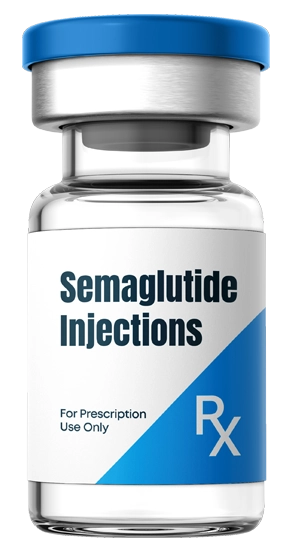
GLP-1 agonists: Semaglutide

Semaglutide injection

Mechanism of action

Glucagon-like peptide-1 receptor agonists suppress appetite via hypothalamic GLP-1 receptors and delay gastric emptying, reducing caloric intake without direct stimulant effects. Glucose-dependent insulin secretion and glucagon suppression steady energy between meals.

Evidence status

Multiple Phase III RCTs. In STEP 1, once-weekly semaglutide 2.4 mg produced mean 14.9% weight loss at 68 weeks vs 2.4% placebo. Brand products are FDA-approved for chronic weight management. Compounded versions are prepared under 503A regulations pursuant to a valid prescription.

Typical protocol

Once-weekly subcutaneous titration. Provider-led dose escalation. Monitoring for GI tolerance, contraindications, and clinical response.

Markers the science tracks

Weight / BMI trajectory, appetite response, GI tolerance, fasting glucose where relevant, concurrent meds.

Individual results may vary. Compounded medication is not an FDA-approved finished product and is not identical to brand formulations studied in trials.

Metabolic & Weight · Grade A · Dual pathway

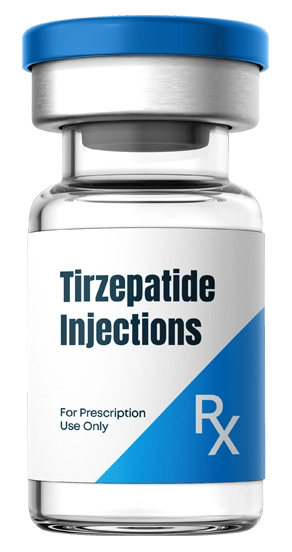
GLP-1 + GIP: Tirzepatide

Tirzepatide injection

Mechanism of action

Dual incretin agonism at GLP-1R and GIPR. Lowers the body-weight set point, slows gastric emptying, and improves insulin response. SURMOUNT-5 compared the two directly in trial conditions; brand outcomes do not transfer to compounded preparations. Dual agonism is the proposed reason SURMOUNT averages often exceed single-pathway GLP-1 alone.

Evidence status

SURMOUNT-1 evaluated dual GIP/GLP-1 agonism for chronic weight management, with mean weight loss of about 15% to 21% over 72 weeks depending on brand dose (higher doses toward the upper end). Brand products carry FDA approval for weight management / T2D indications.

Typical protocol

Once-weekly injection with structured titration. Often chosen when dual-pathway therapy is preferred after a provider reviews eligibility and goals.

Markers the science tracks

Weight trajectory, GI side-effect curve during titration, glycemic markers when indicated, adherence and lifestyle inputs.

Trial averages are research-population outcomes at specific brand doses, not a personal guarantee.

What is a GLP-1 agonist?

A signal your body
already knows.

GLP-1 is a gut hormone released after eating. Therapeutic agonists mimic that signal: short, targeted chains of amino acids that bind specific receptors rather than acting as broad stimulants. Insulin (51 aa), oxytocin (9 aa), and glucagon (29 aa) are all peptides; GLP-1 medicines sit in the same signaling language.

Therapeutic peptides either mimic endogenous signaling molecules or modulate the pathways those molecules activate. They are typically given subcutaneously (or orally for select formulations) depending on absorption and the target pathway.

Why compounding?

503A · patient-specific

Most access pathways patients use for these actives outside brand retail are not the FDA-approved commercial drug. State-licensed 503A pharmacies prepare patient-specific formulations under a prescription, the same regulatory framework used for many compounded hormones and ophthalmic drugs.

  • Prescription-only · named patient
  • State-licensed pharmacy · applicable USP sterile practice
  • Identity, potency, and quality controls as required
  • Not a gray-market “research only” vial
Before you begin

Not for everyone.

GLP-1 therapy isn't appropriate for every patient. A licensed provider screens for these during your assessment, so please share your full history.

Personal/family history of medullary thyroid carcinoma (MTC)
Multiple Endocrine Neoplasia syndrome type 2 (MEN 2)
Pregnancy, planning pregnancy, or breastfeeding
History of pancreatitis or known allergy to the medication

GLP-1 receptor agonists carry a boxed warning regarding thyroid C-cell tumors observed in rodents; it is unknown whether they cause medullary thyroid carcinoma (MTC) in humans. They are contraindicated in patients with a personal or family history of MTC or MEN 2. These medications are compounded by state-licensed 503A pharmacies and are not FDA-approved finished products. This page is educational and is not medical advice. Eligibility is always determined by a licensed provider after reviewing your full history.

References

The primary literature.

We’d rather you read the sources than take our word for it.

1 · NEJM · SURMOUNT-1

Jastreboff AM et al. Tirzepatide once weekly for the treatment of obesity.

N Engl J Med. 2022: dual GIP/GLP-1 agonism; large mean weight-loss effect sizes vs placebo.

Open paper →
2 · NEJM · STEP 1

Wilding JPH et al. Once-weekly semaglutide in adults with overweight or obesity.

N Engl J Med. 2021: mean 14.9% weight loss at 68 weeks on 2.4 mg weekly.

Open paper →
3 · NEJM · SUSTAIN-6

Marso SP et al. Semaglutide and cardiovascular outcomes in patients with type 2 diabetes.

N Engl J Med. 2016: CV outcomes context for the GLP-1 class.

Open paper →
4 · NEJM · SURMOUNT-5

Aronne LJ et al. Tirzepatide as compared with semaglutide for the treatment of obesity.

N Engl J Med. 2025: head-to-head brand comparison; dual GIP/GLP-1 vs single-pathway GLP-1 under trial conditions.

Open paper →

Ranges reported in the literature are not promises. Individual response depends on baseline, adherence, dose, and lifestyle. We track your specific trajectory with your provider.

Questions

Evidence & safety.

Brand injectable semaglutide and tirzepatide have established human evidence: large Phase III programmes (STEP, SURMOUNT) and FDA approval for chronic weight management in brand form. Compounded formulations use the same active classes under 503A rules and are not the studied brand products.
Brand-name semaglutide and tirzepatide products are FDA-approved for specific indications. DirectGLP compounds are prepared by state-licensed 503A pharmacies for individual prescriptions and are not FDA-approved finished products.
503A pharmacies prepare patient-specific formulations under prescription under state board oversight. That is not the same as unregulated “research chemical” supply. Brand trial averages still do not transfer automatically to a compounded preparation.
With clinical follow-up: weight and symptom trajectory, GI tolerance during titration, and provider judgment. Dose is adjusted if response is sub-optimal or side effects require it.
No. This page is educational. Whether treatment is appropriate for you is decided only after a licensed provider reviews your history.
Why prescribed

Not all molecules are
the same.

The same molecule name can sit behind three very different things. Only one is a prescription: made in a licensed pharmacy, prepared under state pharmacy board requirements, supervised by a clinician.

DirectGLP
Provider-prescribed · 503A-compounded
Research-chemical vendors
“Not for human use”
OTC “peptide” supplements
Pills, creams, sprays
Legal status Prescription, via a licensed provider Sold as research only, not for humans Dietary supplement pathway
Who prepares it 503A compounding pharmacy · state board oversight Unverified lab, no standard Supplement manufacturer
Purity tested Pharmacy quality controls as required by applicable standards Rarely: no COA required Not to pharmaceutical standards
Medical oversight A named clinician is accountable None None
Dosing Set by a provider to your history You guess Fixed, often sub-therapeutic
If something goes wrong Provider messaging · clinical path No recourse No recourse
Backed by mechanism. Prescribed to your baseline.

The consultation carries no charge. You pay only if prescribed.

Provider review on every file. 503A compounding. You pay only if prescribed.

30-day money-back guarantee on your first month (see policy)